A road trip can expose small vehicle problems quickly. A weak battery that seems fine around town, a tire that slowly loses air, or worn wiper blades may become much more important when you are miles from home. Use this road trip car checklist before you head out.
Before leaving Fort Collins or heading through Northern Colorado, spend a few minutes checking the basics.
This 10-point road trip car checklist can reduce the chance of an avoidable roadside problem.
Road Trip Car Checklist: The Quick Answer
A good road trip car checklist covers tires and the spare, battery, fluids, lights, wipers, fuel, brakes, an emergency kit, and your route. Check COtrip for closures and weather before you leave, and review the Ready.gov car safety checklist.
1. Check All Four Tires
Tires are your vehicle’s only contact with the road.
Before a trip, inspect:
- Tire pressure
- Tread depth
- Sidewall condition
- Uneven wear
- Cuts, bulges, or cracking
Check pressure when the tires are cold and use the vehicle manufacturer’s recommended pressure, usually found on the driver’s door-jamb label.
Do not use the maximum pressure molded into the tire sidewall as your normal inflation target unless the manufacturer specifically instructs it.
2. Check the Spare Tire
Many drivers inspect the road tires and forget the spare.
Confirm that:
- The vehicle actually has a spare
- The spare is properly inflated
- The tire is not cracked or damaged
- The jack and tools are present
- You know where the wheel-lock key is stored
Some newer vehicles use an inflator kit or run-flat tires instead of a traditional spare. Know what your vehicle has before you need it.
3. Test the Battery
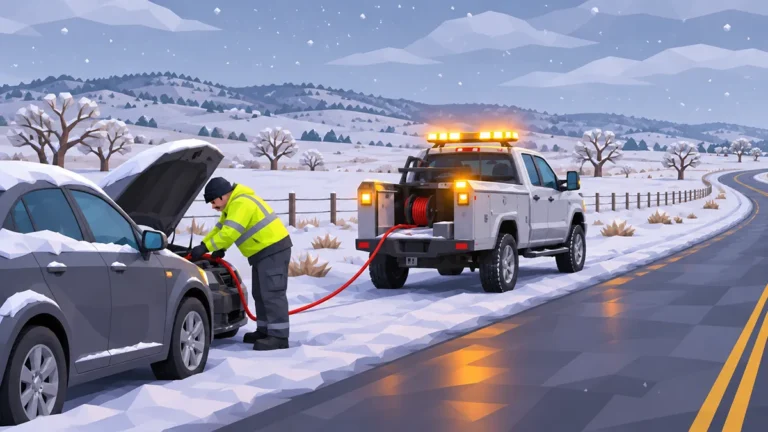
A road trip is a bad time to discover that your battery is near failure.
Pay attention to:
- Slow cranking
- Clicking at startup
- Dim lights before the engine starts
- Corrosion around terminals
- Recent jump-starts
- Battery age
If the battery has shown weakness, have it tested before the trip.
Colorado temperature changes can expose marginal batteries quickly, particularly during winter.
4. Check Engine Oil and Other Fluids
Check fluid levels according to the vehicle owner’s manual.
Depending on the vehicle, that may include:
- Engine oil
- Coolant
- Brake fluid
- Windshield washer fluid
- Power-steering fluid, when applicable
- Transmission fluid, when the manufacturer provides a normal checking procedure
Look underneath the vehicle for fresh leaks.
Do not open a hot cooling system. Check coolant only according to manufacturer instructions and when the system is safe.
5. Check the Lights
Confirm that the following work:
- Headlights
- Brake lights
- Turn signals
- Hazard flashers
- Taillights
- License-plate lights
Visibility is especially important when traveling before sunrise, after dark, in snow, or during heavy rain.
6. Inspect Wipers and Washer Fluid
Colorado weather can shift quickly, and road spray can reduce visibility even when precipitation is light.
Replace wiper blades that streak, chatter, or leave large areas uncleared.
Top off washer fluid with a product suitable for expected temperatures.
In winter, make sure the fluid is rated for freezing conditions.
7. Start With Enough Fuel
Do not begin a longer drive with the tank nearly empty.
A fuller tank gives you more flexibility if:
- Traffic causes delays
- Weather slows travel
- A road closes
- You need to detour
- Fuel stations are farther apart than expected
Do not rely completely on the dashboard’s remaining-range estimate. Hills, wind, towing, cold weather, speed, and idling can change actual fuel consumption.
8. Check the Brakes
You do not need to disassemble the braking system before every trip, but pay attention to warning signs.
Have the vehicle inspected if you notice:
- Grinding
- Squealing that does not go away
- Steering-wheel vibration during braking
- Vehicle pulling while braking
- Soft or sinking brake pedal
- Brake warning lights
Colorado driving can include elevation changes and long downhill sections that put additional demand on brakes.
9. Pack an Emergency Kit
A basic road trip kit should include:
- Phone charger or power bank
- Flashlight
- Water
- Nonperishable snacks
- First-aid supplies
- Reflective warning equipment
- Work gloves
- Jumper cables or charged jump pack
- Basic tools
- Important medications
For winter trips, add warm clothing, blankets, scraper, snow brush, shovel, traction supplies, and other cold-weather items.
10. Check Your Route and Weather
Vehicle preparation matters, but so does route planning.
Before leaving:
- Check current road conditions
- Review the weather forecast
- Know where fuel stops are located
- Tell someone your route for remote trips
- Allow extra time during storms or heavy traffic
Use official Colorado travel information for current road closures and conditions.
Do a Short Test Drive Before a Long Trip
If the vehicle has recently been repaired, has been sitting for a long time, or you have noticed anything unusual, take a short local drive before leaving town.
Listen and feel for:
- Vibration
- Pulling
- Warning lights
- Unusual noises
- Overheating
- Weak braking
- Starting difficulty
It is easier to discover a problem close to home than halfway through a long drive.
Know When Not to Leave
Postpone the trip or address the vehicle first if you notice:
- Active fluid leak
- Severely worn or damaged tire
- Overheating
- Brake warning or serious braking problem
- Battery that barely starts the vehicle
- Major vibration
- Check-engine light flashing
- Steering problem
A roadside service can help with certain emergencies, but preventive repair is better than breaking down.
Finished Your Road Trip Car Checklist? Save a Roadside Number
Add our number as the last item on your road trip car checklist.
If you are traveling through Fort Collins or Northern Colorado, save All Out Roadside Assistance before you leave.
Services include:
- Battery jump-starts
- Vehicle lockouts
- Flat tire changes
- Emergency fuel delivery
- Battery delivery and installation
- Select mobile mechanic services
Call 24/7 Dispatch: 970-412-6926
A 10-minute vehicle check before a road trip can help prevent hours of inconvenience later.