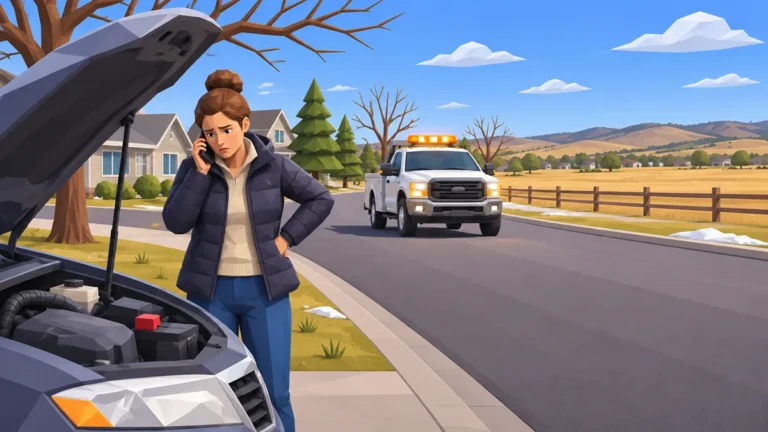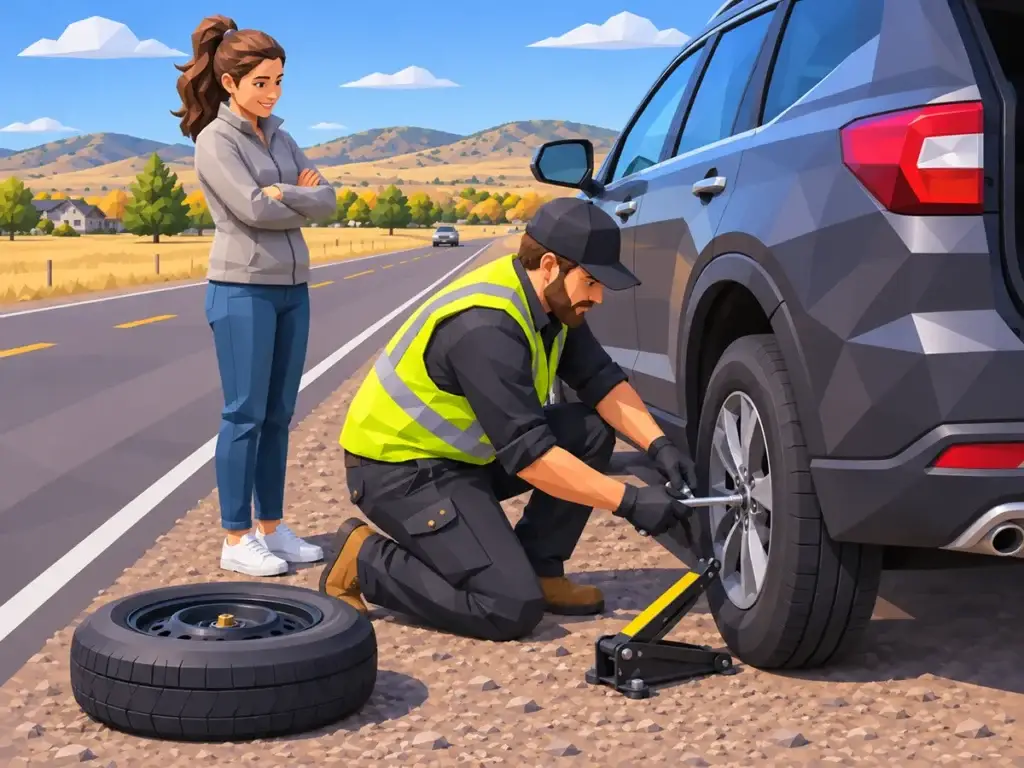
A spare tire is designed to solve an immediate problem, but not every spare is meant to be driven the same way as a normal tire. So how long can you drive on a spare tire? The answer depends on the type of spare and your vehicle.
If you have just had a flat changed, the safe speed and distance depend on the type of spare, the vehicle, the tire condition, and the manufacturer’s instructions.
The most important rule is simple: read the label on the spare tire and check your vehicle owner’s manual. Those instructions take priority over any general guideline.
How Long Can You Drive on a Spare Tire? The Quick Answer
If you are wondering how long can you drive on a spare tire, check the label on the spare and your owner’s manual first. Many temporary spares are limited to about 50 mph and are meant for short distances only. For tire inspection and pressure basics, see NHTSA tire safety guidance.
Temporary Spare vs. Full-Size Spare
There are two common categories of spare tires.
Temporary Spare Tire
A temporary spare, often called a donut, is smaller and lighter than a normal road tire. It is designed to save space and provide short-term mobility after a flat.
Temporary spares generally have stricter speed and distance limitations.
Many are marked with a maximum speed of 50 mph, but the actual limitation for your vehicle is the one printed on the tire or specified by the manufacturer.
Full-Size Spare Tire
A full-size spare may be the same physical size as the vehicle’s normal tires, but that does not always mean it should be treated exactly the same.
It may have different tread, age, pressure, wear, or construction. Some vehicles have a full-size spare intended only for temporary use.
Check the tire itself and the owner’s manual before assuming it can be driven indefinitely.
How Many Miles Can You Drive on a Donut Spare?
There is no single mileage limit that applies to every temporary spare tire.
You may see general recommendations online, but the correct limit depends on the specific tire and vehicle.
Temporary spares are intended to get you to a location where the original tire can be repaired or replaced, not to continue normal driving for days or weeks.
Arrange permanent tire service as soon as possible.
Why Temporary Spares Have Limits
A donut spare differs from your normal tire in several important ways.
It may be:
- Narrower
- Smaller in diameter
- Built with less tread
- Inflated to a much higher pressure
- Designed for limited heat buildup
- Different from the other tires in traction and handling
These differences can affect braking, steering, cornering, stability, and the operation of all-wheel-drive or driver-assistance systems.
Why Speed Matters
Higher speed creates more heat and puts more stress on a temporary spare.
It also increases stopping distance and reduces the margin for error when the vehicle is already handling differently because of the mismatched tire.
If the spare says 50 mph maximum, treat that as a maximum, not a target speed.
Drive more conservatively when weather, traffic, road surface, or vehicle handling makes lower speeds appropriate.
Check the Spare Tire Pressure
Temporary spares often require significantly more air pressure than normal passenger tires.
Because the spare may sit unused for years, it can slowly lose pressure without anyone noticing.
Check the specified pressure printed on the tire or vehicle label. Do not assume the spare should match the pressure of the regular tires.
A severely underinflated spare may be unsafe to use.
Consider the Age of the Spare
A spare tire can age even if it has never been driven on.
Rubber deteriorates over time because of heat, oxygen, storage conditions, and normal aging.
Inspect the spare for cracking, bulges, dry rot, unusual deformation, or other visible damage. When in doubt, have the tire evaluated by a professional.
What About All-Wheel-Drive Vehicles?
All-wheel-drive and four-wheel-drive vehicles can be more sensitive to differences in tire diameter and tread depth.
A temporary spare may change wheel speed relative to the other tires, and some manufacturers impose specific restrictions on where the spare can be installed or how far it can be driven.
Follow the owner’s manual carefully. In some cases, the manufacturer may recommend moving a normal tire to a different axle before installing the temporary spare.
Can You Drive a Temporary Spare in Snow?
A temporary spare is generally not ideal for snow or ice.
Its narrow tread, limited design, and different traction characteristics can reduce vehicle stability.
If winter conditions are severe, driving on a temporary spare may be significantly more challenging. Follow manufacturer instructions and consider whether towing or another solution is safer.
Do not install tire chains on a temporary spare unless your vehicle and tire manufacturer specifically allow it.
When You Should Not Drive on the Spare
Do not continue driving if:
- The spare is visibly damaged
- The spare is severely underinflated
- The vehicle vibrates strongly
- The spare is not the correct size or type
- The wheel is damaged
- Lug nuts cannot be properly secured
- The vehicle pulls severely or feels unstable
- There is suspension or brake damage
A flat tire can sometimes be the result of a larger impact. If you struck a curb, pothole, debris, or another object, there may be more damage than the tire alone.
What to Do After a Roadside Tire Change
Once the spare is installed:
- Confirm the spare is properly inflated.
- Follow the speed and distance limits on the tire and in the owner’s manual.
- Drive conservatively.
- Avoid unnecessary trips.
- Arrange tire inspection, repair, or replacement as soon as possible.
- Return the repaired or replacement tire to normal service and restore the spare to proper storage.
Do not let a temporary spare become your long-term tire.
Need Help Changing to Your Spare Tire?
Knowing how long can you drive on a spare tire helps you plan a safe trip to a tire shop.
All Out Roadside Assistance provides 24/7 flat tire assistance in Fort Collins and surrounding Northern Colorado communities when the vehicle has a safe, usable spare and the location allows the work to be completed safely.
Call 24/7 Dispatch: 970-412-6926
Basic daytime roadside services start at $65. Mileage, processing, after-hours service, and additional charges may apply.