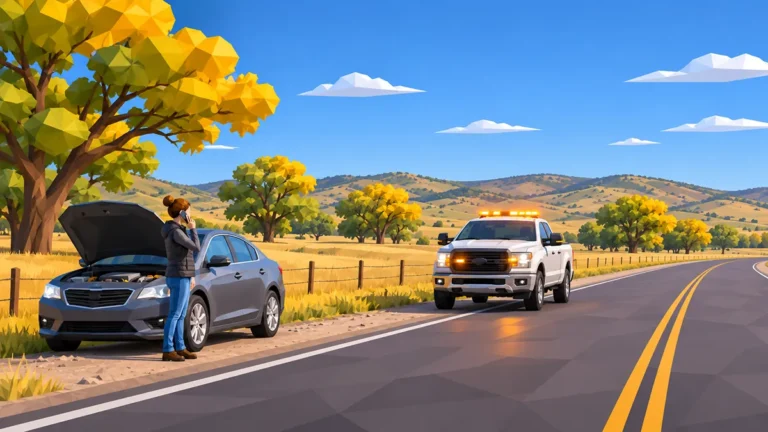
A breakdown on I-25 is different from a breakdown in a parking lot or quiet neighborhood. Traffic speeds are high, shoulders can be narrow, and weather or visibility can change quickly in Northern Colorado. If your car breaks down on the highway, your first priority is safety, not diagnosis.
If your car breaks down on I-25 near Fort Collins, Loveland, Windsor, or another Northern Colorado community, your first priority is not diagnosing the vehicle. It is getting yourself and the vehicle into the safest position possible.
Here are the steps to take.
If Your Car Breaks Down on the Highway: The Quick Answer
When your car breaks down on the highway, move to the shoulder or an exit if you can, turn on your hazards, and stay away from traffic. Call 911 if anyone is hurt or the vehicle is blocking a lane. Before and during travel, check COtrip for I-25 closures, weather, and crash information.
1. Move Out of the Travel Lane If You Can Do So Safely
If the vehicle is still moving, turn on your hazard lights and move toward a safe shoulder or exit.
Do not stop in an active lane unless the vehicle physically cannot continue and there is no other option.
If you can reach an exit, parking lot, rest area, or another protected location without creating additional risk, that may be safer than stopping beside interstate traffic.
Avoid sudden steering or braking. If the vehicle has a tire failure, loss of power, or other problem, make controlled movements and slow gradually.
2. Make the Vehicle Visible
Once stopped, turn on your hazard flashers.
At night or in poor weather, visibility is especially important. Keep lights on as appropriate, but be mindful of battery power if the engine is not running.
Do not stand behind the vehicle or in a travel lane to place warning devices if doing so would expose you to traffic.
3. Decide Whether It Is Safer to Stay in the Vehicle
There is no single answer for every highway breakdown.
If the vehicle is safely positioned well off the roadway and you are protected from traffic, remaining inside with your seat belt fastened may be safer than standing on the shoulder.
If there is fire, smoke, a fuel leak, or another immediate hazard, move away from the vehicle to a safer location if you can do so without crossing active traffic.
Never stand between the vehicle and moving traffic.
4. Call 911 When the Situation Is Dangerous
Roadside assistance is not an emergency response service.
Call 911 if:
- Someone is injured
- The vehicle is blocking a traffic lane
- You are stopped in a location where a collision seems likely
- There is a fire or significant fuel leak
- A crash has occurred
- You or a passenger are in immediate danger
Law enforcement or highway responders may need to secure the scene before roadside service can be performed.
5. Identify Your Exact Location
The fastest way to make roadside dispatch more effective is to provide precise location information.
On I-25, look for:
- Direction of travel, northbound or southbound
- Nearest exit number
- Nearest interchange or cross street
- Mile marker
- Nearby signs, businesses, or landmarks
- Your phone’s map location
Do not simply say, “I’m on I-25 near Fort Collins.” That can still cover many miles of interstate.
If your phone has a map app, dropping a pin or reading the nearest labeled interchange can help.
6. Explain What Happened Before the Vehicle Stopped
Tell dispatch what you noticed:
- Did the engine lose power?
- Did you hear a bang or feel a tire fail?
- Did warning lights come on?
- Did the temperature gauge rise?
- Did the vehicle begin shaking?
- Did the electrical system go dark?
- Does the engine still crank?
These details help determine whether you may need a jump-start, tire change, fuel delivery, mobile diagnosis, or towing.
Common I-25 Roadside Problems
Dead Battery
A battery problem often appears before entering the highway rather than while driving, but a weak charging system can also leave the vehicle unable to restart after a stop.
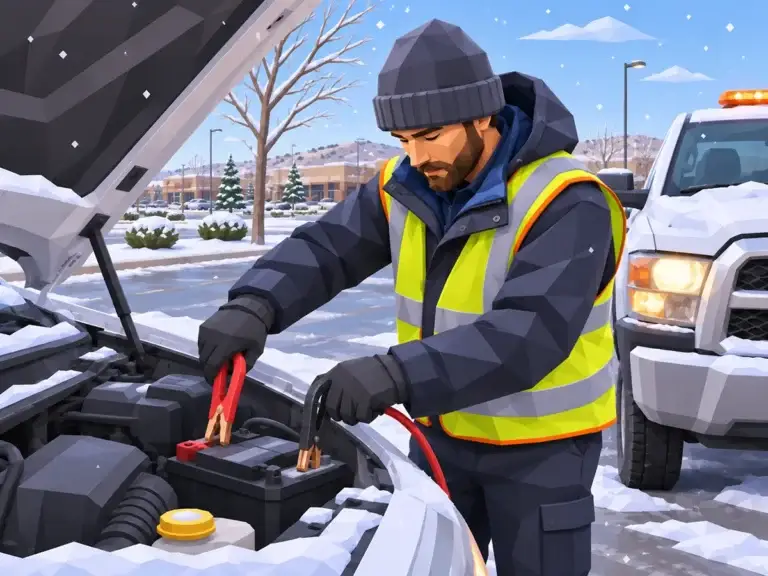
A jump-start may solve a discharged battery, while alternator or electrical problems may require more diagnosis.
Flat Tire or Blowout
If a tire suddenly fails at highway speed, hold the steering wheel firmly, avoid slamming on the brakes, gradually release the accelerator, stabilize the vehicle, and move off the roadway once you can do so safely.
A roadside tire change may be possible when the vehicle has a usable spare and is parked in a safe working location.
Out of Fuel
If the vehicle simply ran out of gas or diesel, emergency fuel delivery may get you moving without a tow.
Confirm the required fuel type before requesting delivery.
Overheating
If the temperature warning appears or steam is visible, shut the engine off once you reach a safe location.
Do not open a hot radiator or pressurized coolant reservoir. Serious burns can result.
Overheating may require towing, particularly when coolant has leaked out or a mechanical component has failed.
Mechanical Failure
Belts, hoses, starters, sensors, fuel-system components, and other parts can fail without warning. Select roadside diagnosis may be possible, but highway conditions can limit what can be repaired safely on location.
Winter Breakdowns on I-25
Northern Colorado winter conditions can make a routine breakdown more serious.
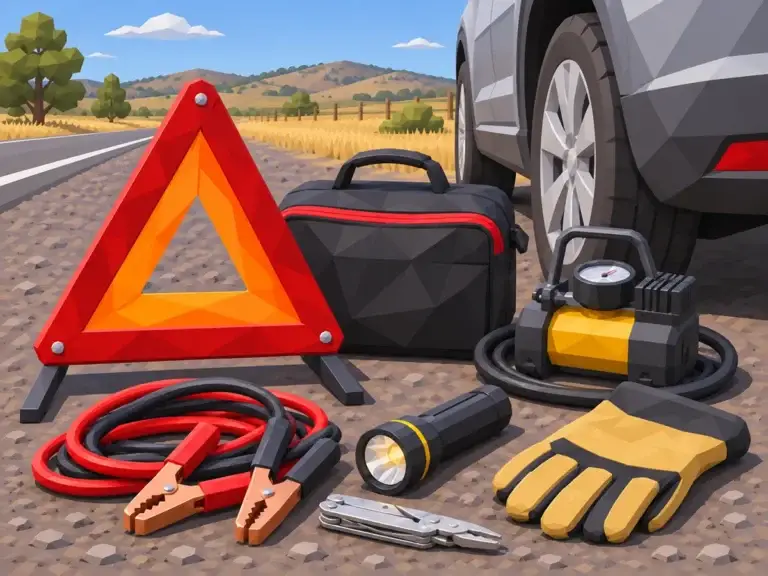
Keep an emergency kit in the vehicle with items such as:
- Warm clothing and blankets
- Water and nonperishable food
- Phone charger or power bank
- Flashlight
- Ice scraper and snow brush
- First-aid supplies
- Reflective warning equipment
- Jumper cables
- Traction aids where appropriate
Before winter travel, check road conditions through Colorado’s official travel resources and make sure the vehicle has adequate fuel, working lights, good tires, and a healthy battery.
Do not leave the vehicle running in deep snow without making sure the exhaust pipe is clear. Snow blocking the exhaust can allow dangerous gases to accumulate.
Can Roadside Assistance Work on I-25?
Often, yes, but only when the location is safe enough for the technician to work.
A wide shoulder or protected area may allow a jump-start, fuel delivery, or tire change. A narrow shoulder, heavy traffic, poor visibility, or unsafe weather may make roadside work impractical.
The technician or responding authorities may determine that the vehicle needs to be moved before service can be performed.
Car Breaks Down on the Highway? Call for Help on I-25
Save our number before your next trip so you know who to call if your car breaks down on the highway.
All Out Roadside Assistance provides 24/7 roadside help throughout Fort Collins and surrounding Northern Colorado areas for common problems including jump-starts, lockouts, flat tires, emergency fuel delivery, battery service, and select mobile mechanic work.
Call 24/7 Dispatch: 970-412-6926
When calling from I-25, provide your direction of travel and nearest exit or mile marker whenever possible. If you are in immediate danger or blocking traffic, call 911 first.