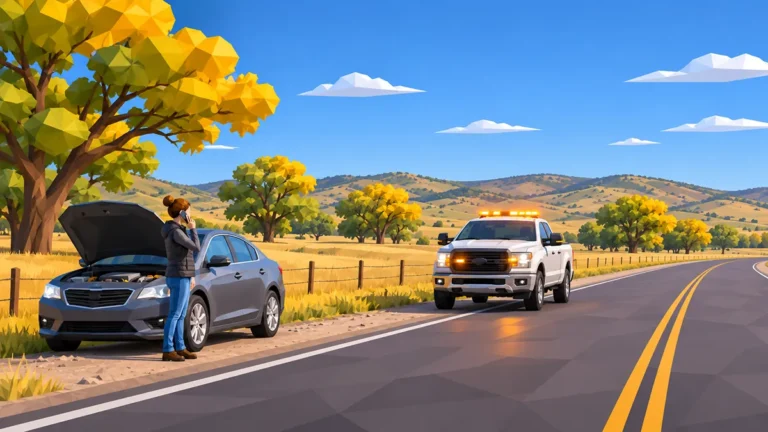
Cold Colorado mornings have a way of exposing vehicle problems that were easy to ignore in warmer weather. You turn the key or press the start button and hear a slow crank, clicking, or nothing at all. When your car won’t start in cold weather, the battery is the usual suspect, but not the only one.
A weak battery is one of the most common causes, but it is not the only reason a car won’t start in cold weather.
Before repeatedly trying the ignition, pay attention to what the vehicle is telling you.
Car Won’t Start in Cold Weather: The Quick Answer
If your car won’t start in cold weather, note whether it cranks slowly, clicks, or does nothing. A slow crank or clicking usually points to a weak battery, and a jump-start may help. The NHTSA winter driving tips recommend testing your battery before winter.
Start With the Symptoms
The sound and behavior of the vehicle can provide useful clues.
Slow Cranking
If the engine turns over slowly, the battery may not be delivering enough power. Cold temperatures reduce battery output while the engine can require more energy to turn.
Rapid Clicking
Rapid clicks often point toward low battery voltage or a poor electrical connection.
One Click but No Crank
A single click can indicate a weak battery, bad connection, starter problem, or another starting-system issue.
No Sound and No Lights
If the vehicle is completely dark and unresponsive, the battery may be deeply discharged, a connection may be loose, or another electrical problem may be present.
Normal Cranking but No Start
If the engine turns over at normal speed but never begins running, the problem may involve fuel, ignition, a sensor, or the vehicle’s security system rather than the battery.
Why Cold Weather Makes Starting Harder
Conventional car batteries produce electricity through chemical reactions. Those reactions slow in cold temperatures, which reduces available power.
At the same time, the engine can require more energy to start because lubricants are colder and mechanical resistance is higher.
This combination often exposes a battery that was already weakened by age, heat, short trips, or repeated discharge.
Cold weather may be the moment the battery fails, but the underlying decline may have started months earlier.
Try Turning Off Electrical Accessories
Before another start attempt, turn off unnecessary electrical loads such as:
- Heater blower
- Heated seats
- Rear defroster
- Radio
- Interior lights
- Phone chargers and accessories
The vehicle still needs certain electrical systems to start, but reducing unnecessary loads can leave more available power for the starter.
Do Not Keep Cranking Repeatedly
If the engine does not start after a reasonable attempt, stop and reassess.
Repeated long cranking attempts can further discharge the battery and place additional heat and wear on the starter.
If each attempt becomes weaker, battery power is likely dropping.
When a Jump-Start May Help
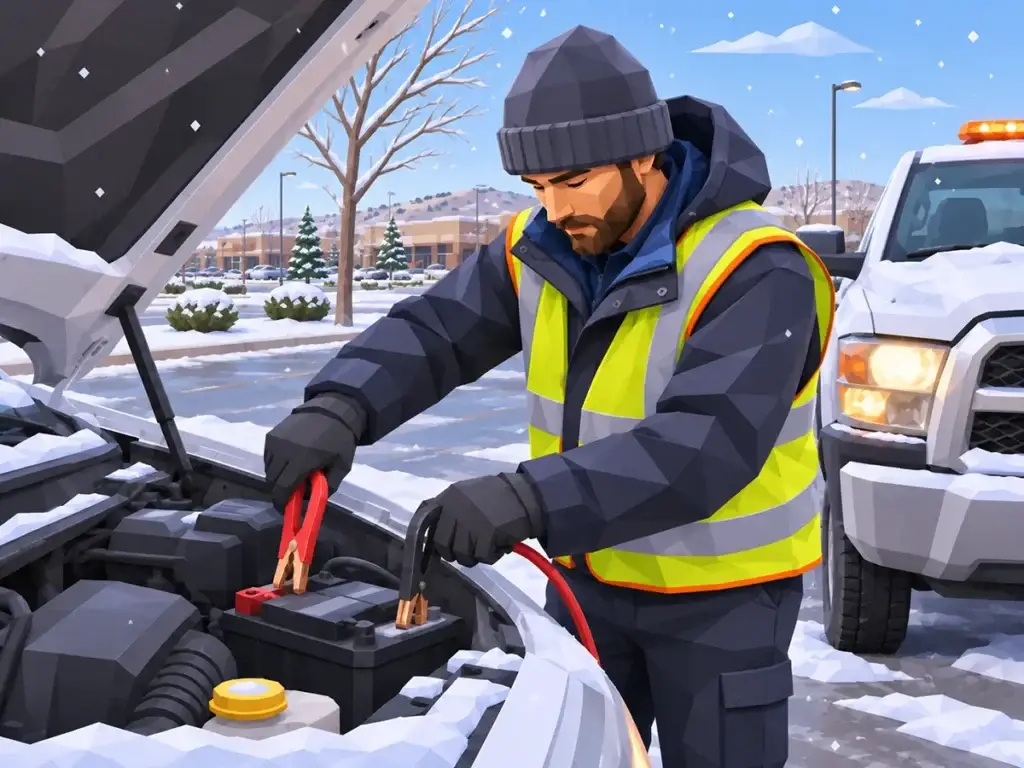
A jump-start may help if the battery is discharged but otherwise safe to use.
A roadside jump is a reasonable next step when:
- Lights are dim
- The engine cranks slowly
- You hear clicking
- The vehicle was left sitting
- Lights or accessories may have been left on
- Cold weather exposed a weak battery
If you are using jumper cables yourself, follow the procedures in your vehicle owner’s manual. Some vehicles have designated jump points and special instructions.
Do Not Jump a Damaged or Frozen Battery
Stop if the battery is:
- Swollen
- Cracked
- Leaking
- Distorted
- Covered with signs suggesting it may be frozen
A physically damaged or frozen battery can be dangerous. Do not attempt to jump it.
Call for professional roadside assistance and describe the battery’s condition.
What If the Jump-Start Does Not Work?
If a proper jump does not start the vehicle, the problem may involve more than the battery.
Possible causes include:
- Failed starter
- Alternator or charging-system problem
- Loose or corroded battery cables
- Fuel-system issue
- Ignition-system problem
- Blown fuse or bad relay
- Security-system or key-recognition issue
- Other electrical or mechanical faults
Tell the technician exactly what the vehicle does when you attempt to start it.
That is much more useful than simply saying, “It won’t start.”
Could You Need a New Battery?
Possibly.
A battery that repeatedly dies, will not hold a charge, or has become increasingly slow to start may be near the end of its useful life.
If the vehicle starts after a jump but needs another jump soon afterward, have the battery and charging system tested rather than assuming the issue is solved.
All Out Roadside Assistance may provide battery delivery and installation depending on your vehicle and battery availability.
What If the Vehicle Starts and Then Dies?
If the engine starts after a jump but stops again quickly, a charging-system problem may be involved.
The alternator supplies electrical power while the engine is running and recharges the battery. A failed alternator can allow the vehicle to run only until available battery power is exhausted.
A battery warning light while the engine is running can also indicate a charging-system problem.
That situation may require further diagnosis or towing.
Cold-Weather Prevention Tips
A few habits can reduce the chance of another cold-weather no-start.
Have the battery tested before deep winter. Testing is especially worthwhile when the battery is several years old or starting has slowed.
Keep the terminals clean. Corrosion and loose connections reduce electrical performance.
Drive regularly. A vehicle that sits for long periods may slowly discharge its battery.
Avoid repeated very short trips. Starting uses substantial power, and short trips may not give the charging system enough time to replenish it.
Keep a winter emergency kit. Include warm clothing, blankets, water, snacks, phone power, and a flashlight.
Pay attention to the first warning sign. A slow start today may become a no-start tomorrow.
Car Won’t Start in Cold Weather? Call for Help
We help when your car won’t start in cold weather anywhere in Fort Collins and Northern Colorado.
All Out Roadside Assistance provides 24/7 jump-starts, battery service, and select mobile mechanic services in Fort Collins and surrounding Northern Colorado communities.
Call 24/7 Dispatch: 970-412-6926
Basic daytime roadside services start at $65. Mileage, processing, after-hours service, batteries, parts, and additional labor may apply.