A flat tire can happen anywhere, from your driveway or a Fort Collins parking lot to I-25 or a rural Northern Colorado road. What you do in the first few minutes matters, especially when traffic, darkness, snow, or a narrow shoulder makes the situation more dangerous. Before anyone attempts a flat tire change, focus on getting the vehicle and everyone in it to a safer spot.
If you need flat tire assistance in Fort Collins, focus on getting yourself and the vehicle into the safest reasonable position before worrying about changing the tire.
Flat Tire Change: The Quick Answer
Pull completely out of traffic, turn on your hazards, and confirm you have a usable spare and wheel-lock key. A roadside flat tire change is possible when the spare is in good condition and the vehicle can be lifted safely. For tire pressure and inspection basics, see NHTSA tire safety guidance.
1. Do Not Stop in an Unsafe Traffic Lane
If the tire begins losing air while you are driving, avoid abrupt steering or braking.
Reduce speed carefully and look for a safe place to pull completely out of traffic. A parking lot, side street, wide shoulder, or other level area is usually better than stopping immediately beside fast-moving traffic when the vehicle can still be moved safely.
If the tire suffers a sudden blowout, keep both hands on the steering wheel, avoid slamming on the brakes, gradually release the accelerator, stabilize the vehicle, and slow down before moving off the roadway when it is safe to do so.
2. Turn On Your Hazard Lights
Use your hazard flashers to make the vehicle easier for other motorists to notice.
At night or in poor visibility, keep the vehicle visible without standing in the roadway or positioning yourself where passing drivers may not see you.
If you are in an immediately dangerous location, call 911 before attempting roadside service.
3. Do Not Change the Tire Beside Fast Traffic Unless It Is Safe
Changing a tire requires working near the outside of the vehicle, using a jack, and sometimes applying significant force to lug nuts.
That can be dangerous on a narrow shoulder, steep slope, soft ground, ice, or next to fast traffic.
Professional roadside technicians may also decline to lift a vehicle when the location is unsafe. In some situations, the vehicle may need to be moved or towed to a safer location before tire service can be performed.
4. Check Whether You Have a Spare Tire
Many newer vehicles do not include a traditional spare tire. Some use an inflator kit, run-flat tires, or no emergency tire equipment at all.
If it is safe to check, determine whether you have:
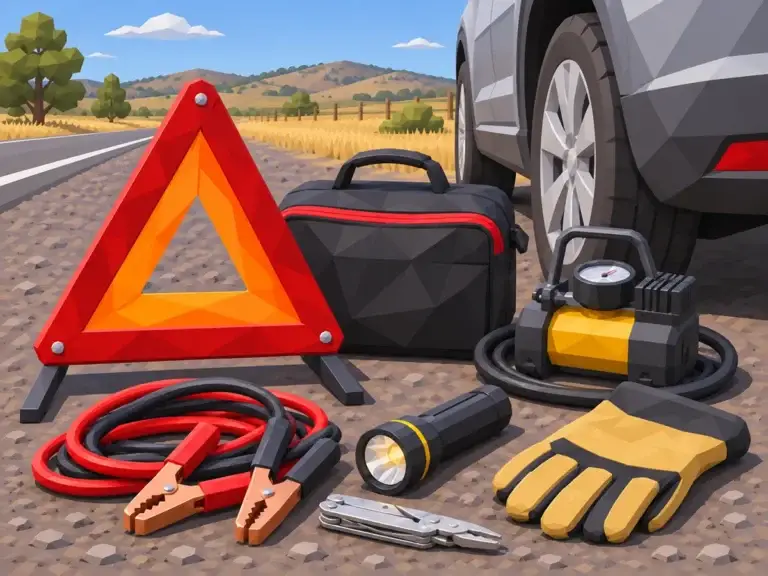
- A full-size spare
- A temporary spare, sometimes called a donut
- A tire inflation and sealant kit
- A wheel-lock key, if your vehicle uses locking lug nuts
If you do not have a usable spare, tell dispatch before a technician is sent. A standard roadside tire change may not be possible without one.
5. Check the Spare’s Condition
A spare tire that has been sitting unused for years may be underinflated, cracked, or otherwise unsafe.
You do not need to crawl under the vehicle or put yourself in danger to inspect it. If the spare is easy to access, look for obvious damage and check its pressure if you have a gauge.
Temporary spare tires often require much higher air pressure than normal passenger tires, so use the pressure specified by the vehicle manufacturer or printed on the spare.
6. Locate the Wheel-Lock Key
If your vehicle has locking lug nuts, the technician may need the matching key to remove the wheel.
Common storage locations include:
- Glove box
- Center console
- Trunk organizer
- Spare tire compartment
- Factory tool kit
If you cannot find it, tell dispatch. A missing wheel-lock key can prevent a standard roadside tire change.
7. Call for Roadside Tire Assistance
When you call All Out Roadside Assistance, provide:
- Your exact location
- Vehicle year, make, model, and color
- Which tire is flat, if known
- Whether you have a spare
- Whether the spare appears usable
- Whether you have a wheel-lock key
- Any visible wheel, suspension, or body damage
- Whether the vehicle is in a safe location
This information helps dispatch determine whether a roadside tire change is likely to solve the problem.
What Happens During a Roadside Tire Change?
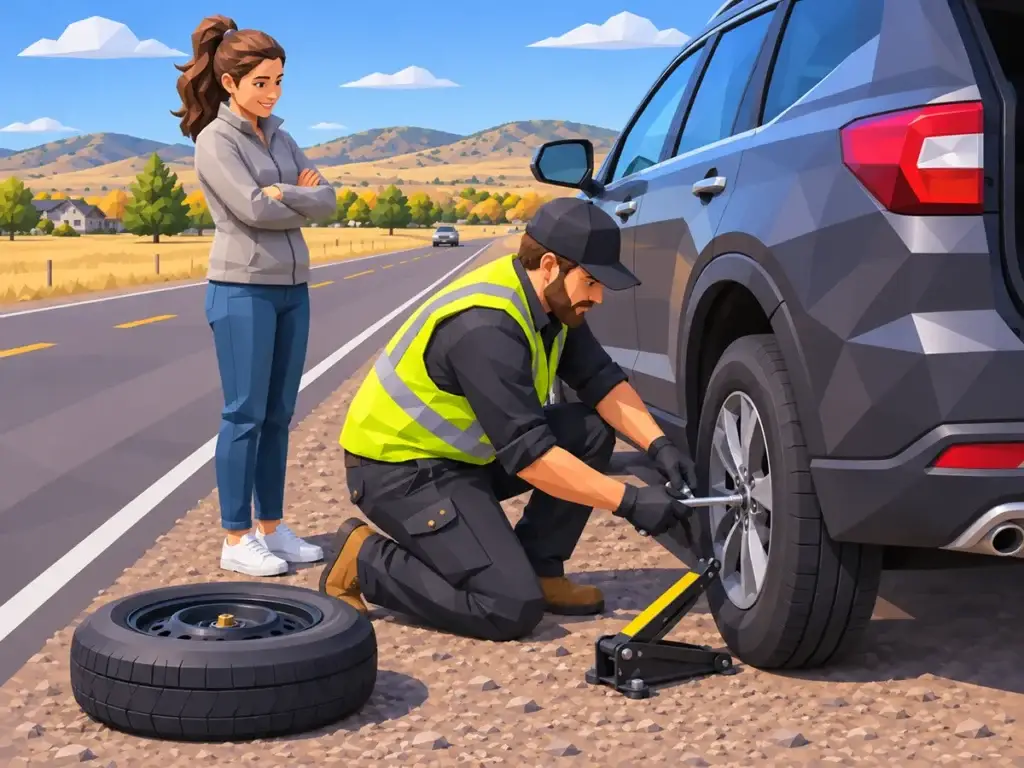
When conditions are safe and the vehicle has a usable spare, the technician can lift the vehicle, remove the damaged wheel, install the spare, and lower the vehicle.
A roadside tire change is a temporary solution when a temporary spare is used. It does not repair the damaged tire.
You should have the original tire inspected, repaired, or replaced as soon as practical.
When a Spare Tire Is Not Enough
You may need towing or additional repair if:
- There is no spare tire
- The spare is damaged or flat
- The wheel is bent or broken
- A control arm, axle, suspension component, or brake part is damaged
- Lug nuts are stripped, seized, or inaccessible
- The vehicle has been involved in a collision
- The tire failure damaged the body or wheel well
- The vehicle cannot be lifted safely
Tell dispatch about any unusual noise, impact, vibration, or visible damage that happened before the tire went flat.
How Far Can You Drive on a Temporary Spare?
There is no universal distance that applies to every vehicle and spare tire.
Temporary spares are designed for short-term use and commonly have reduced speed and distance limitations. Many are marked with a maximum speed of 50 mph, but you should follow the instructions printed on the tire and in your vehicle owner’s manual.
Drive conservatively and arrange for a permanent tire repair or replacement as soon as possible.
A temporary spare may also change braking, handling, ground clearance, traction, and the operation of driver-assistance systems.
What If You Have a Tire Blowout?
A blowout is a rapid loss of tire pressure and can feel much more dramatic than a slow flat.
If a tire blows while you are driving:
- Hold the steering wheel firmly with both hands
- Avoid slamming on the brakes
- Gradually release the accelerator
- Keep the vehicle pointed where you want it to go
- Allow the vehicle to slow in a controlled manner
- Pull off the roadway when it is safe
Once stopped, do not inspect the tire from the traffic side if doing so puts you close to moving vehicles.
How Much Does Flat Tire Assistance Cost in Fort Collins?
All Out Roadside Assistance advertises basic daytime roadside services starting at $65.
Mileage, processing, after-hours service, additional labor, and other charges may apply depending on the location and situation.
Call dispatch for current pricing.
Need a Flat Tire Change in Fort Collins?
We provide 24/7 flat tire change service when the vehicle has a usable spare and the location is safe to work in.
All Out Roadside Assistance provides 24/7 roadside tire changes in Fort Collins and surrounding Northern Colorado communities when the vehicle has a safe, usable spare and conditions allow the work to be performed safely.
Call 24/7 Dispatch: 970-412-6926
If your vehicle is stopped in an unsafe roadway location, someone is injured, or there is an immediate traffic hazard, call 911 first.