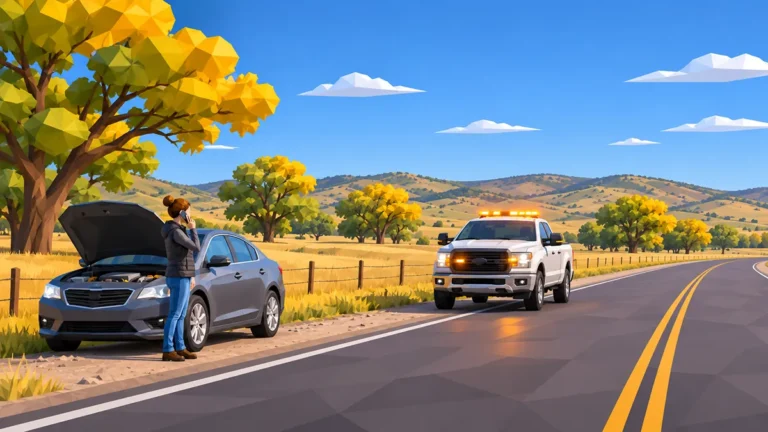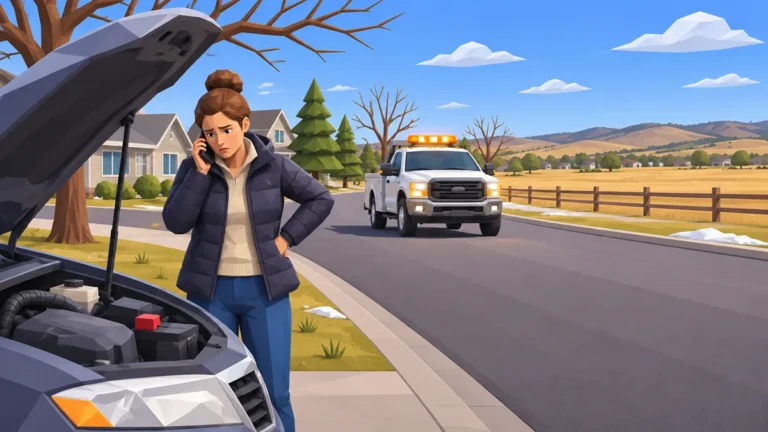
You turn the key or press the start button and get a click, a slow crank, or nothing at all. A weak or dead battery is one of the most common reasons a vehicle will not start, especially when temperatures drop in Northern Colorado. This guide explains when a car jump start is likely to work and when something else may be wrong.
A roadside jump-start may be enough to get you moving again, but not every no-start condition is caused by the battery. Knowing the difference can save time and help you request the right kind of roadside assistance.
If you need a jump-start in Fort Collins, here is what to look for.
Car Jump Start: The Quick Answer
A car jump start usually works when the battery is simply discharged, such as after lights were left on or a cold night. If the engine still will not start after a proper car jump start, the starter, alternator, connections, or fuel system may be the problem. The NHTSA winter driving tips also recommend having your battery checked before cold weather sets in.
Common Signs of a Weak or Dead Battery
A discharged or failing battery may cause:
- Rapid clicking when you try to start the vehicle
- A slow or weak engine crank
- Dim interior lights or headlights
- Electrical accessories that work weakly or not at all
- A vehicle that starts after a jump but struggles again later
- No response when turning the key or pressing the start button
Some of these symptoms can also be caused by bad battery connections, starter problems, charging-system issues, or other electrical faults.
Why Cold Weather Makes Battery Problems More Noticeable
Cold weather places extra demands on a vehicle battery.
The chemical reactions inside a conventional lead-acid battery slow as temperatures drop, reducing the battery’s ability to deliver power. At the same time, cold engine oil and other winter conditions can require more energy to crank the engine.
That is why a battery that seemed fine during warmer weather may suddenly fail on a freezing Fort Collins morning.
Cold weather does not always cause the original battery damage. Heat and age can weaken a battery over time, with winter simply exposing the problem when the vehicle needs more starting power.
When a Jump-Start Can Help
A jump-start is most useful when the battery is discharged but the rest of the starting and charging systems are functioning normally.
Common causes of a discharged battery include:
- Lights left on
- A door or trunk left open
- The vehicle sitting unused for an extended period
- Short trips that do not allow the battery to recharge fully
- Cold temperatures exposing an already weak battery
- An accessory drawing power while the vehicle is off
If the vehicle starts normally after the jump and continues running, the immediate problem may have been low battery charge. However, the battery should still be tested if it is older, has needed multiple jump-starts, or shows other signs of weakness.
When a Jump-Start May Not Solve the Problem
If the vehicle still will not start after a proper jump attempt, the problem may be somewhere else.
Possible causes include:
A failed starter. You may hear a single click or no crank even with adequate battery power.
A bad alternator. The battery may repeatedly discharge because the charging system is not replenishing it while the engine runs.
Loose or corroded connections. Battery cables and terminals need solid electrical contact.
A severely damaged battery. A battery with internal failure may not respond to a jump.
Fuel or ignition problems. A vehicle may crank normally but fail to start because the engine is not receiving fuel or spark.
Security or key-recognition problems. Some vehicles prevent starting if the immobilizer does not recognize the key.
Other electrical issues. Fuses, relays, wiring, sensors, and control modules can cause a no-start condition.
If a jump-start does not work, continuing to attempt starts repeatedly can drain the battery further or overheat starting components.
Is It Safe to Jump-Start Every Battery?
No.
Do not attempt to jump a battery that appears swollen, cracked, leaking, frozen, or physically damaged. A damaged battery can present a serious safety risk.
If you are unsure about the condition of the battery, professional roadside assistance is the safer choice.
Also remember that battery locations and jump points vary by vehicle. Some vehicles have designated remote jump terminals under the hood even when the battery is mounted elsewhere.
What Happens During a Roadside Jump-Start?
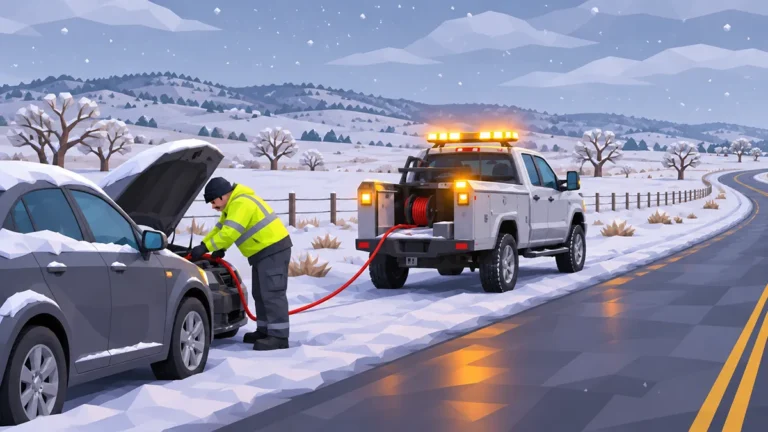
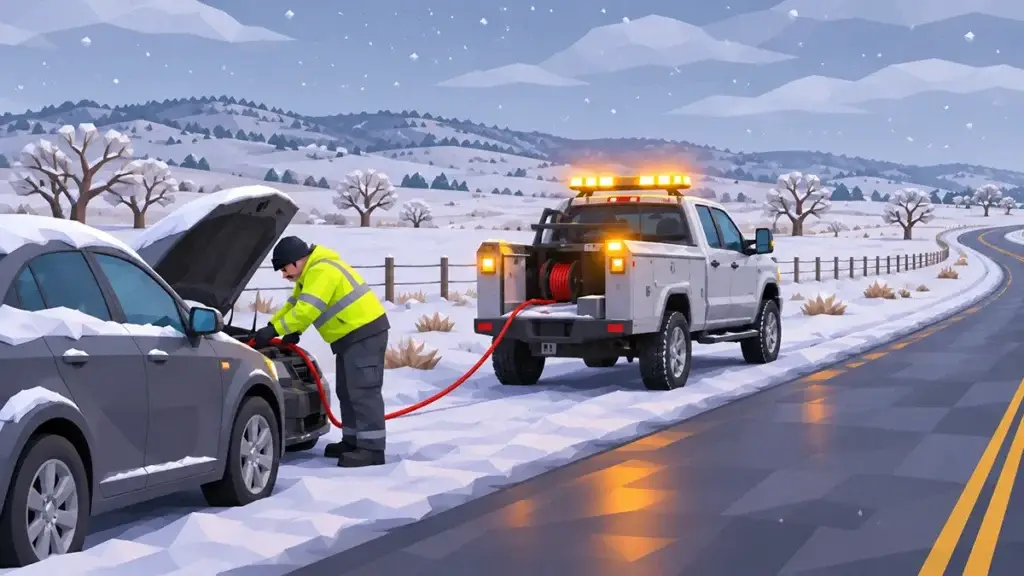
A technician will typically assess the vehicle and battery area, connect appropriate jump equipment, and attempt to start the vehicle safely.
If the vehicle starts, the technician may be able to help determine whether the battery appears to be the likely cause or whether additional diagnosis is appropriate.
If it does not start, the technician can explain whether another roadside service may be available or whether the vehicle likely needs further diagnosis or towing.
When Should You Replace the Battery Instead?
Replacement may make more sense when:
- The battery repeatedly goes dead
- The battery cannot hold a charge
- It is several years old and testing shows weakness
- The case is damaged or swollen
- The vehicle requires frequent jump-starts
- Starting has become progressively slower
Battery life varies with climate, vehicle use, charging conditions, and battery quality. If you are unsure, testing is better than guessing.
All Out Roadside Assistance may provide battery delivery and installation depending on vehicle requirements and battery availability.
What Should You Do After a Successful Jump-Start?
Do not assume the problem is permanently solved.
If the battery went dead for an obvious reason, such as lights being left on, allowing the charging system time to replenish the battery may help. However, simply idling for a few minutes may not fully recharge a deeply discharged battery.
If the battery died without a clear explanation, get the battery and charging system checked. A failing alternator or parasitic electrical draw can leave you stranded again.
If the battery warning light is illuminated while the engine is running, seek further diagnosis. That warning can indicate a charging-system problem rather than a simple battery issue.
How Much Does a Jump-Start Cost in Fort Collins?
All Out Roadside Assistance advertises basic daytime roadside services starting at $65.
Mileage, processing, after-hours service, battery replacement, parts, and additional diagnostic or mechanical labor may increase the total.
Call with your location and vehicle symptoms for current pricing.
Need a Car Jump Start in Fort Collins?
Our technicians handle car jump start calls 24/7 across Fort Collins and Northern Colorado.
All Out Roadside Assistance provides 24/7 jump-start service in Fort Collins and surrounding Northern Colorado communities, along with battery delivery, lockout assistance, flat tire changes, emergency fuel delivery, and select mobile mechanic services.
Call 24/7 Dispatch: 970-412-6926
If the battery is cracked, swollen, leaking, or appears frozen, do not attempt to jump-start it. Tell dispatch what you see and keep a safe distance from the battery area.