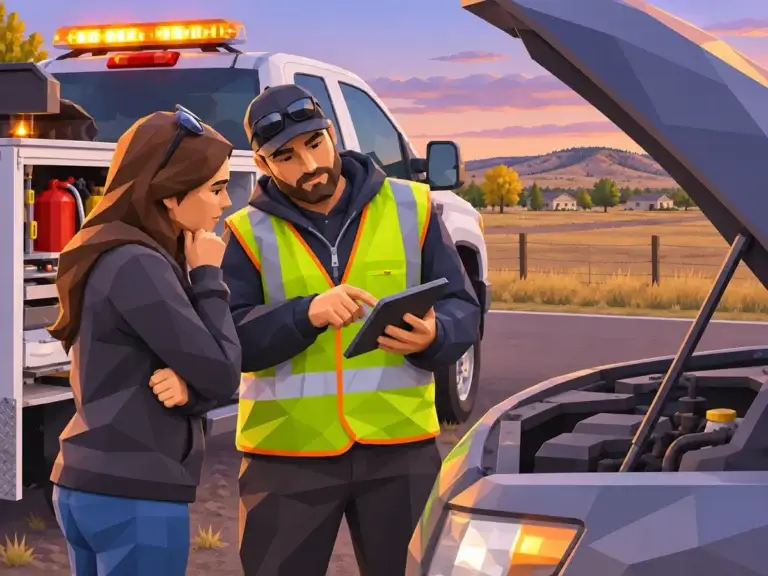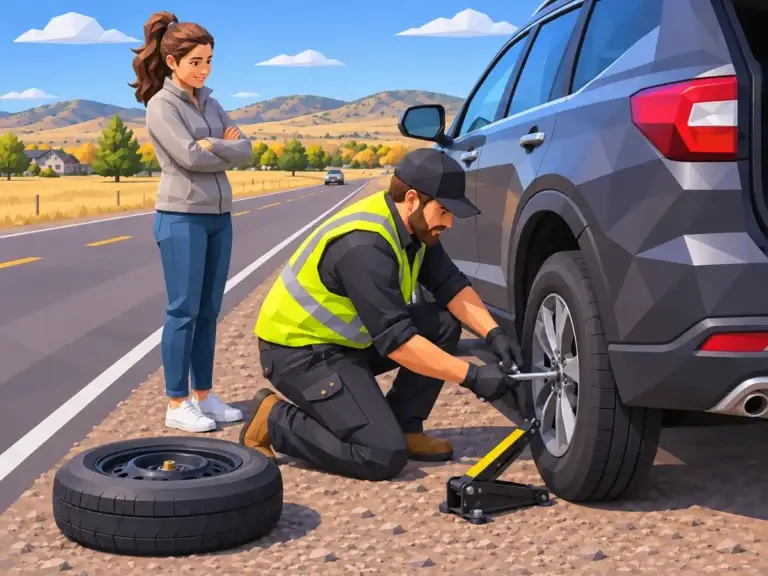
Winter driving in Northern Colorado can change quickly. A clear morning can turn into snow, wind, icy pavement, poor visibility, or a road closure. Even a minor vehicle problem can become more serious when temperatures are low and help is farther away. A well-stocked winter car emergency kit can make a stranded vehicle far less dangerous.
A winter roadside emergency kit will not prevent every breakdown, but it can make a major difference while you wait for assistance.
Colorado transportation officials recommend preparing both your vehicle and an emergency kit before winter travel. Here is a practical list for drivers in Fort Collins and throughout Northern Colorado.
Winter Car Emergency Kit: The Quick Answer
A winter car emergency kit should cover warmth, water and food, light, phone power, visibility, and traction. Blankets, gloves, a flashlight, a power bank, an ice scraper, a small shovel, and jumper cables are a good start. The Ready.gov car safety checklist and NHTSA winter driving tips offer additional checklists.
1. Warm Clothing and Blankets
Cold exposure can become the biggest concern during a winter breakdown.
Keep extra items in the vehicle such as:
- Warm coat
- Hat
- Gloves or mittens
- Extra socks
- Boots
- Blanket or sleeping bag
- Hand warmers
Do not assume the vehicle heater will continue working. A dead battery, empty fuel tank, or engine problem may leave you without heat.
2. Water and Nonperishable Food
Keep drinking water and food that can be stored in the vehicle.
Good emergency options include shelf-stable snacks that are easy to eat without preparation.
Replace food and water periodically, especially when containers have been exposed to extreme heat or freezing temperatures.
3. Phone Charger and Backup Power
Your phone may be your most important tool during a breakdown. It can provide GPS location, roadside contact information, weather updates, and communication with family or emergency responders.
Keep:
- A vehicle charging cable
- A charged portable power bank
- Important roadside numbers saved in your phone
During a breakdown, reduce unnecessary phone use so you preserve battery life until help arrives.
4. Flashlight and Extra Batteries
A flashlight makes it easier to see around the vehicle at night and can help you locate emergency supplies without relying on your phone.
A battery-powered or hand-crank flashlight is a good choice. Check batteries periodically so the light is ready when you need it.
5. Ice Scraper and Snow Brush
Visibility is essential in Colorado winter conditions.
Keep a sturdy ice scraper and snow brush in the vehicle so you can clear windows, mirrors, headlights, taillights, and other important surfaces.
Do not drive with snow covering the windshield, side windows, or exterior lights.
6. Small Snow Shovel
A compact shovel can help clear snow around tires or the exhaust area if your vehicle becomes stuck or is parked during heavy snowfall.
If the engine is running while snow is accumulating, make sure the exhaust outlet remains clear. A blocked exhaust can allow carbon monoxide to build up around or inside the vehicle.
7. Traction Supplies
Depending on where you travel, useful traction items can include:
- Approved tire chains or traction devices
- Sand or non-clumping cat litter
- Traction boards or other appropriate aids
Know how to use any traction device before you are stranded in snow. Follow your vehicle and tire manufacturers’ instructions.
Colorado traction and chain requirements can change with road conditions, so drivers should check current requirements before winter travel.
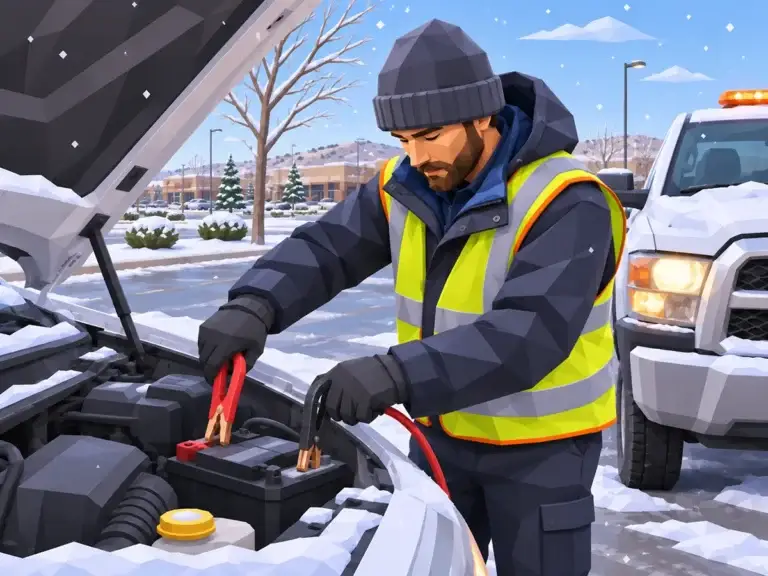
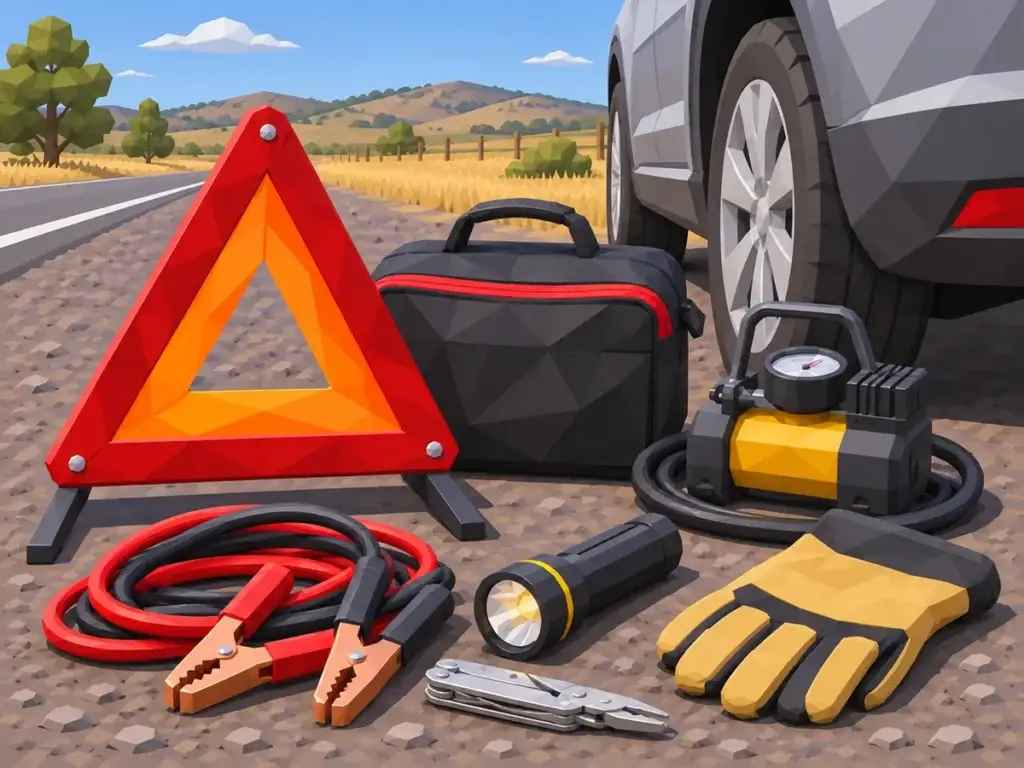
8. Jumper Cables or a Portable Jump Pack
Cold weather can expose a weak battery quickly.
Jumper cables can be useful when another vehicle is available. A portable jump pack gives you more independence, but it needs to be kept charged and stored according to the manufacturer’s temperature and safety recommendations.
Never attempt to jump-start a battery that is swollen, cracked, leaking, or appears frozen.
9. Reflective Warning Equipment
Visibility is especially important during darkness, snowfall, fog, or blowing snow.
Reflective triangles or other approved warning devices can make a stopped vehicle easier to see, but do not put yourself in traffic to deploy them.
Your safety matters more than placing a warning device in a dangerous location.
10. First-Aid Kit and Essential Medications
Keep a basic first-aid kit in the vehicle along with any essential personal medications that you may need during a delay.
Check expiration dates periodically and replace used or outdated supplies.
11. Basic Vehicle Supplies
Useful items can include:
- Tire pressure gauge
- Work gloves
- Basic tool kit
- Windshield washer fluid rated for winter temperatures
- Paper towels or shop towels
- Tow strap if you know how and when it can be used safely
Do not attempt repairs beyond your experience or in an unsafe roadside location.
12. Vehicle Documents and Important Numbers
Keep current registration, insurance information, and roadside assistance contact information easy to find.
Save All Out Roadside Assistance in your phone before you need help:
Call 24/7 Dispatch: 970-412-6926
If you are in a dangerous location, involved in a crash, or someone is injured, call 911 first.
Prepare the Vehicle Too
An emergency kit is only part of winter preparation.
Before winter travel, check:
Battery. Cold weather can expose a weak battery.
Tires. Check tread depth, condition, and pressure, including the spare. Tire pressure changes with temperature.
Lights. Make sure headlights, brake lights, turn signals, and hazard lights work.
Wipers and washer fluid. Visibility can deteriorate quickly in snow and road spray.
Coolant and heater. The cooling system and cabin heater should be functioning correctly.
Fuel. Avoid beginning long winter drives with a nearly empty tank.
Brakes. Address unusual noises, vibration, or braking performance before winter travel.
Check Road Conditions Before You Leave
Before longer trips, check current Colorado road and weather conditions through official state travel resources.
Conditions can change after you leave, so continue monitoring weather when a storm is expected.
Tell someone your route and expected arrival time when traveling through remote areas or during severe weather.
What to Do If You Become Stranded in Winter
If the vehicle becomes disabled:
- Move as far out of traffic as safely possible.
- Turn on hazard lights when appropriate.
- Call for roadside assistance and provide an accurate location.
- Stay warm and conserve phone power.
- Do not wander away from the vehicle in poor visibility unless remaining with it is clearly unsafe.
- If running the engine for heat, ensure the exhaust outlet is clear of snow.
- Call 911 if there is an immediate safety or medical emergency.
Winter Car Emergency Kit Ready? Save Our Number Too
Keep this number in your winter car emergency kit along with your other supplies.
All Out Roadside Assistance provides 24/7 help for common roadside problems including dead batteries, lockouts, flat tires, emergency fuel delivery, battery replacement, and select mobile mechanic services.
Save the number now so you do not have to search for help while stranded:
Call 24/7 Dispatch: 970-412-6926
A few minutes of winter preparation can make a breakdown much easier to manage and help you stay safer until assistance arrives.